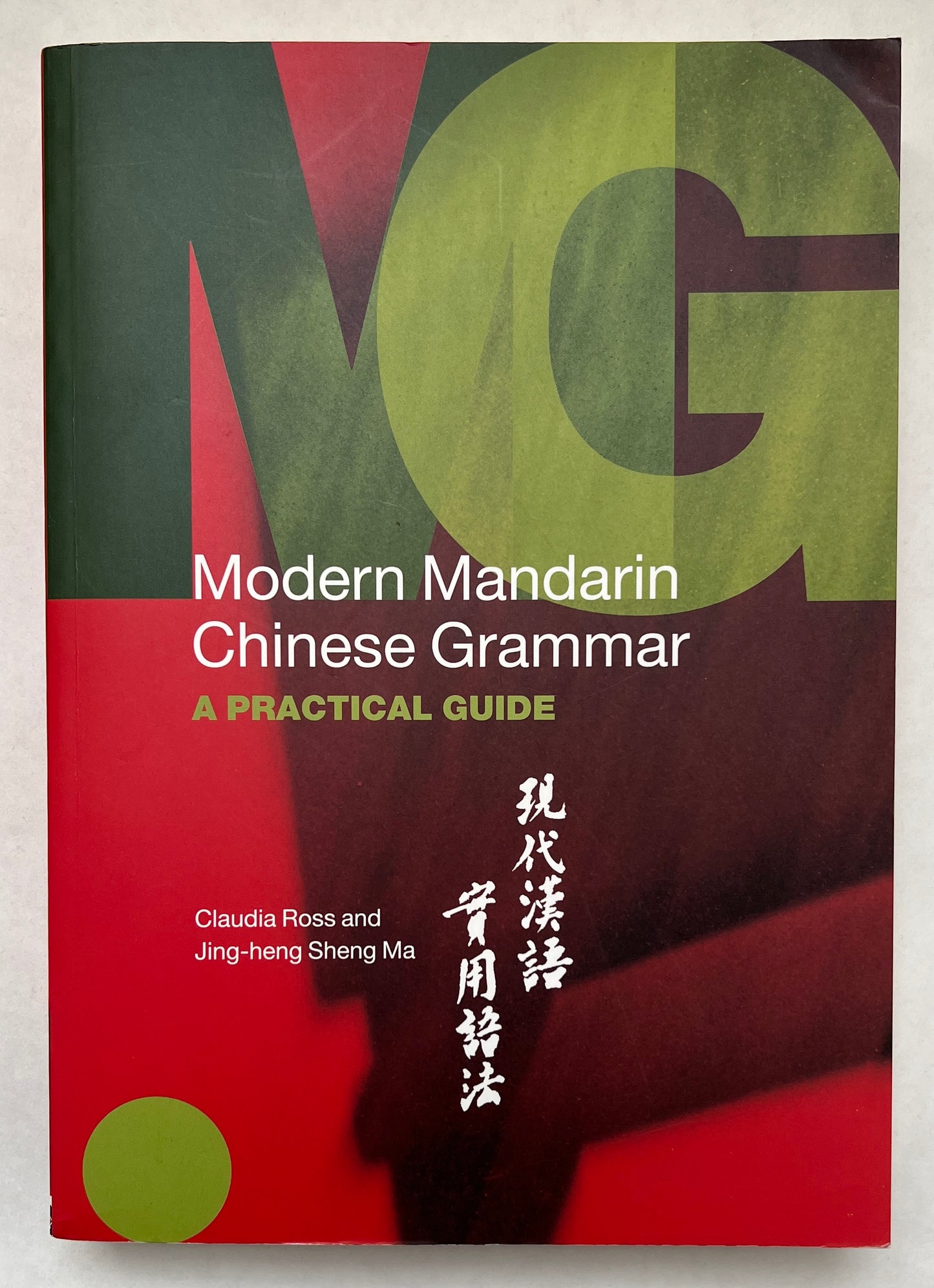

Ross, Claudia; Sheng Ma, Jing-Heng
Modern Mandarin Chinese Grammar: A Practical Guide
Modern Mandarin Chinese Grammar: A Practical Guide
Couldn't load pickup availability
London: Routledge/Taylor & Francis Group, 2006. First Edition (presumed; no prior editions or printings cited). Octavo in wraps; 397 pp; 26 cm. Near fine. Paperback. ISBN: 9780415700092, 9780415700108
An innovative reference guide to Mandarin Chinese combining traditional and function-based grammar. Part A covers traditional grammatical categories: phrase order, nouns, verbs and specifiers. Part B is organised around language functions and situations such as: communcation strategies, making comparisons, giving and seeking information etc. Main features include: examples in pinyin, simplified and traditional characters, clear explanations, and accessible descriptions. Suitable for self-study, building vocabulary, and developing grammar, writing, and reading skillsContents: 1. Overview of Pronunciation and Pinyin Romanization. 2. Syllable, Meaning, and Word. 3. The Chinese Writing System: An Overview. 4. Grammatical Categories, Grammatical Terms, and Basic Phrase Order. 5. Nouns. 6. Numbers. 7. Specifiers and Demonstratives. 8. Classifiers. 9. Noun Phrases. 10. Adjectival Verbs. 11. Stative Verbs. 12. Modal Verbs. 13. Action Verbs. 14. Prepositions and Prepositional Phrases. 15. Adverbs. 16. Conjunctions. 17. Passive. 18. Names, Kinship Terms, Titles, and Terms of Address. 19. Introductions. 20. Greetings and Goodbyes. 21. Basic Strategies for Communication. 22. Telecommunications and e-communications: Telephones, the internet, beepers, and faxes. 23. Negating Information. 24. Asking Questions and Replying to Questions. 25. Expressing Identification, Possession, and Existence. 26. Describing People, Places, and Things. 27. Describing How Actions are Performed. 28. Indicating Result, Conclusion, Potential, and Extent. 29. Making Comparisons. 30. Talking About the Present. 31. Talking About Habitual Actions. 32. Talking About the Future. 33. Indicating Completion and Talking About the Past. 34. Talking About Change, New Situations, and Changing Situations. 35. Talking About Duration and Frequency. 36. Expressing Additional Information. 37. Expressing Contrast. 38. Expressing Sequence. 39. Expressing Simultaneous Situations. 40. Expressing Cause and Effect or Reason and Result. 41. Expressing Conditions. 42. Expressing both, all, every, any, none, not any, and no matter how. 43. Expressing Location and Distance. 44. Talking about Movement, Directions, and Means of Transportation. 45. Talking about Clock Time and Calendar Time. 46. Expressing Obligation and Prohibitions. 47. Expressing Commands and Permission. 48. Expressing Ability and Possibility. 49. Expressing Desires, Needs, Preferences, and Willingness. 50. Expressing Knowledge, Advice, and Opinions. 51. Expressing Fear or Worry. 52. Expressing Speaker Attitudes and Perspectives. 53. Topic, Focus, and Emphasis. 54. Guest and Host. 55. Giving and Responding to Compliments. 56. Expressing Satisfaction and Dissatisfaction. 57. Expressing Gratitude and Responding to Expressions of Gratitude. 58. Invitations, Requests, and Refusals. 59. Expressing Apologies, Regrets, and Sympathy. 60. Expressing Congratulations and Good Wishes. | Includes index.
Share