

Rojas González, Francisco
La Negra Angustias
La Negra Angustias
Couldn't load pickup availability
México: Fondo de Cultura Económica, 1984. 220 pages; 17 cm. Fine; unread. Paperback. ISBN: 9681616251 ((paperback)); 9789681616250 ((paperback
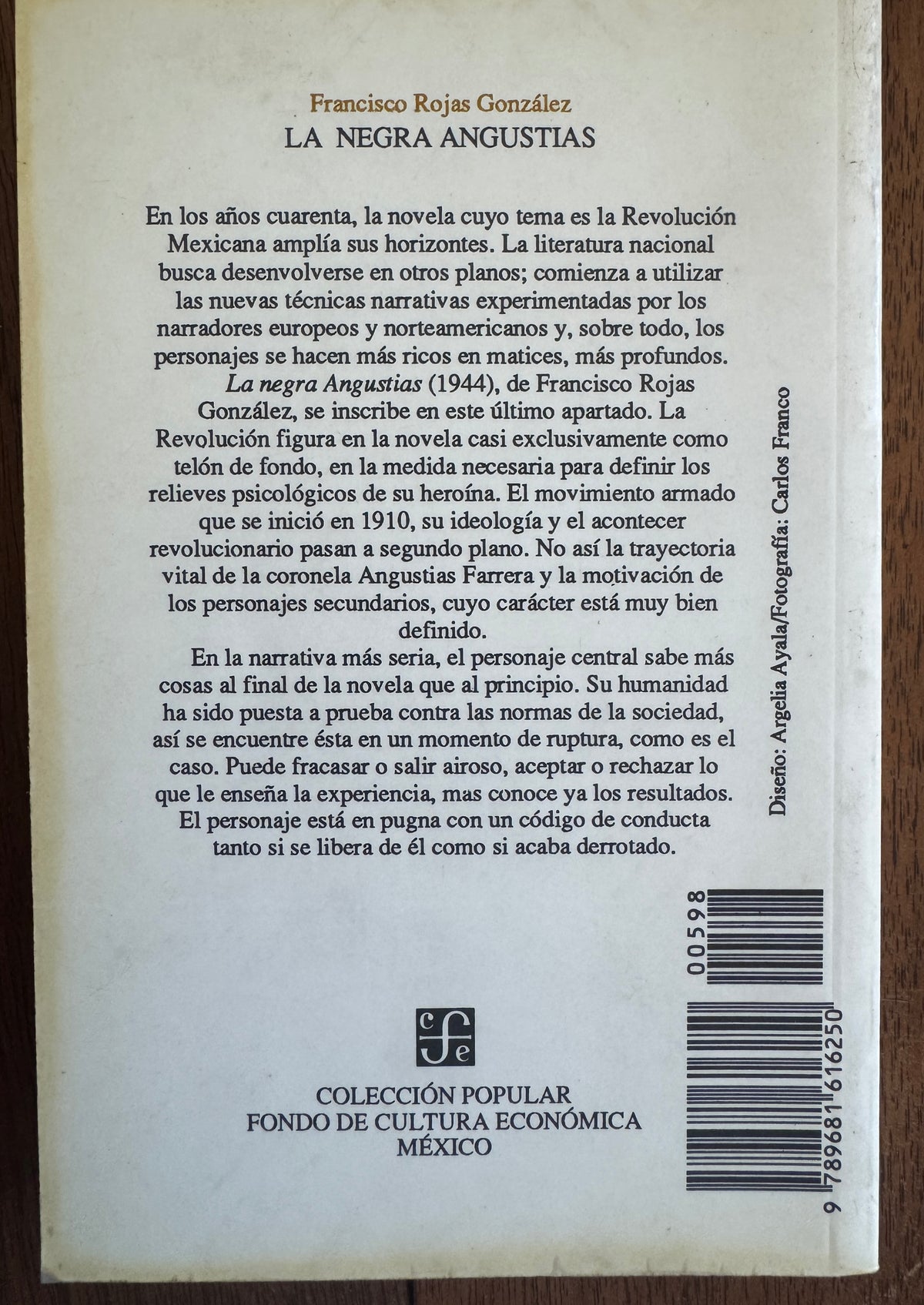
In Spanish. Colección popular (Fondo de Cultura Económica (Mexico)); 274. Novelas mexicanas. Afro-mexicanas. | Francisco Rojas González (1903-1951), was a Jalisco-born writer who came to fiction by way of ethnography and diplomacy: after studying commerce in Mexico City and ethnology at the Museo Nacional, he served in Mexico's foreign service in Guatemala and as consul in Salt Lake City, Denver, and San Francisco, then from 1935 worked at the Instituto de Investigaciones Sociales of the Universidad Nacional Autónoma de México (UNAM), producing studies of indigenous peoples and languages that fed directly into his stories and novels, above all the posthumous collection El diosero (1952), now a staple of Mexican school reading. La Negra Angustias won the Premio Nacional de Literatura for 1944 and is the work that secured his place in literary history. It follows Angustias Farrera, an Afro-mestiza goatherd's daughter from Morelos who flees a forced marriage, is taken in by Zapatista fighters, and rises to coronela commanding her own troop, punishing the men who abused women and imposing her own rough justice before her authority is undone when she falls for a pale, educated city schoolteacher. Critics count it among the first novelas de la Revolución with a woman as protagonist, and one of the few to give an Afro-Mexican character the central role, at a time when the genre was dominated by the male, disillusioned perspective of Azuela and Guzmán; Rojas González brought to it techniques of psychological interiority borrowed from contemporary European and North American fiction, together with an ethnographer's eye for rural Morelos speech and custom. Its afterlife has been unusually rich: Matilde Landeta, one of Mexico's first women directors, adapted it in 1949 (released 1950) as La negra Angustias, a landmark of feminist Mexican cinema that revised the novel's ending to keep the coronela's dignity intact, and the book has stayed in print through Fondo de Cultura Económica and the SEP "Lecturas Mexicanas" series, with a steady stream of scholarship on its treatment of race, gender, and revolutionary violence.
Share